
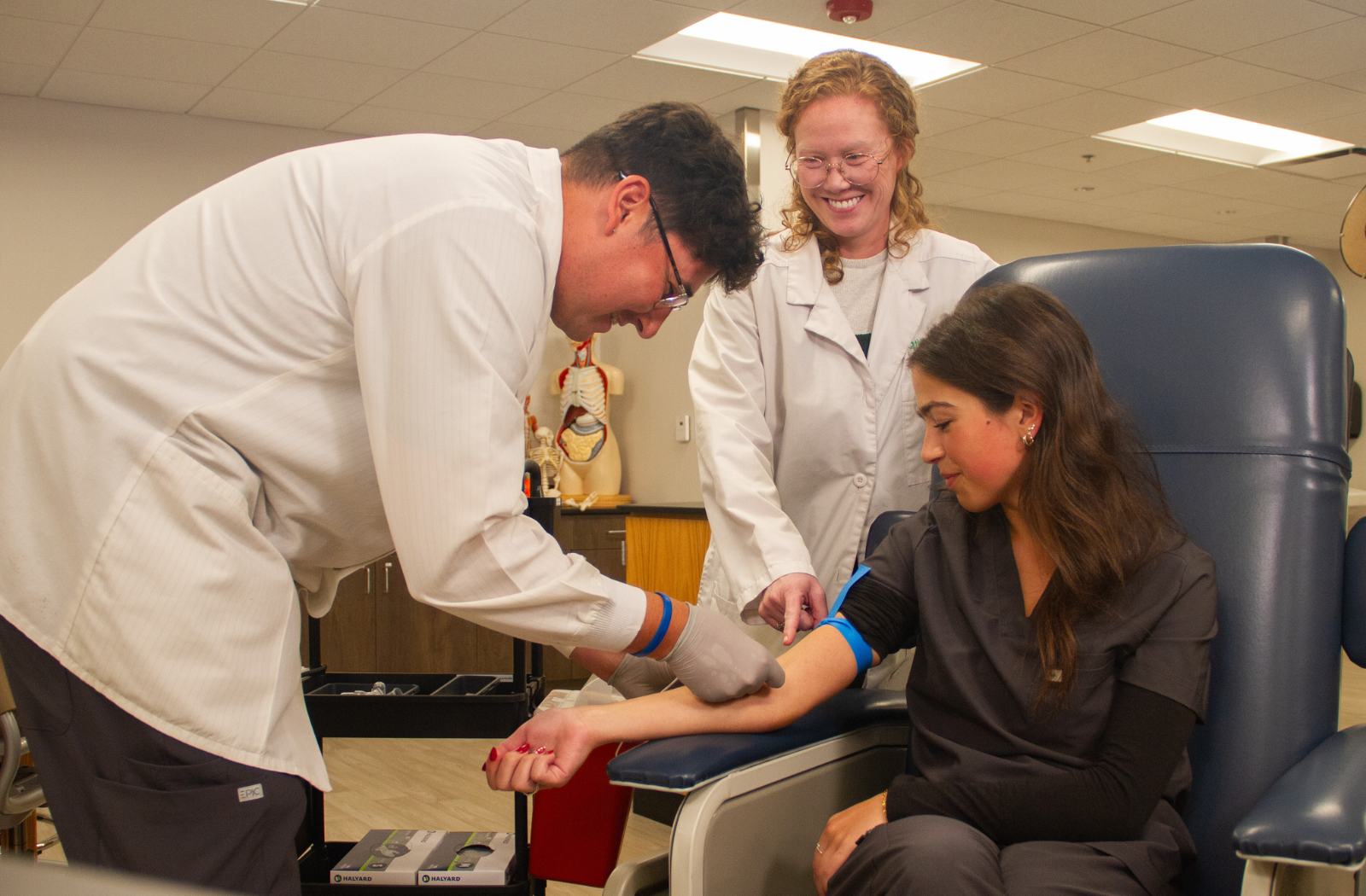
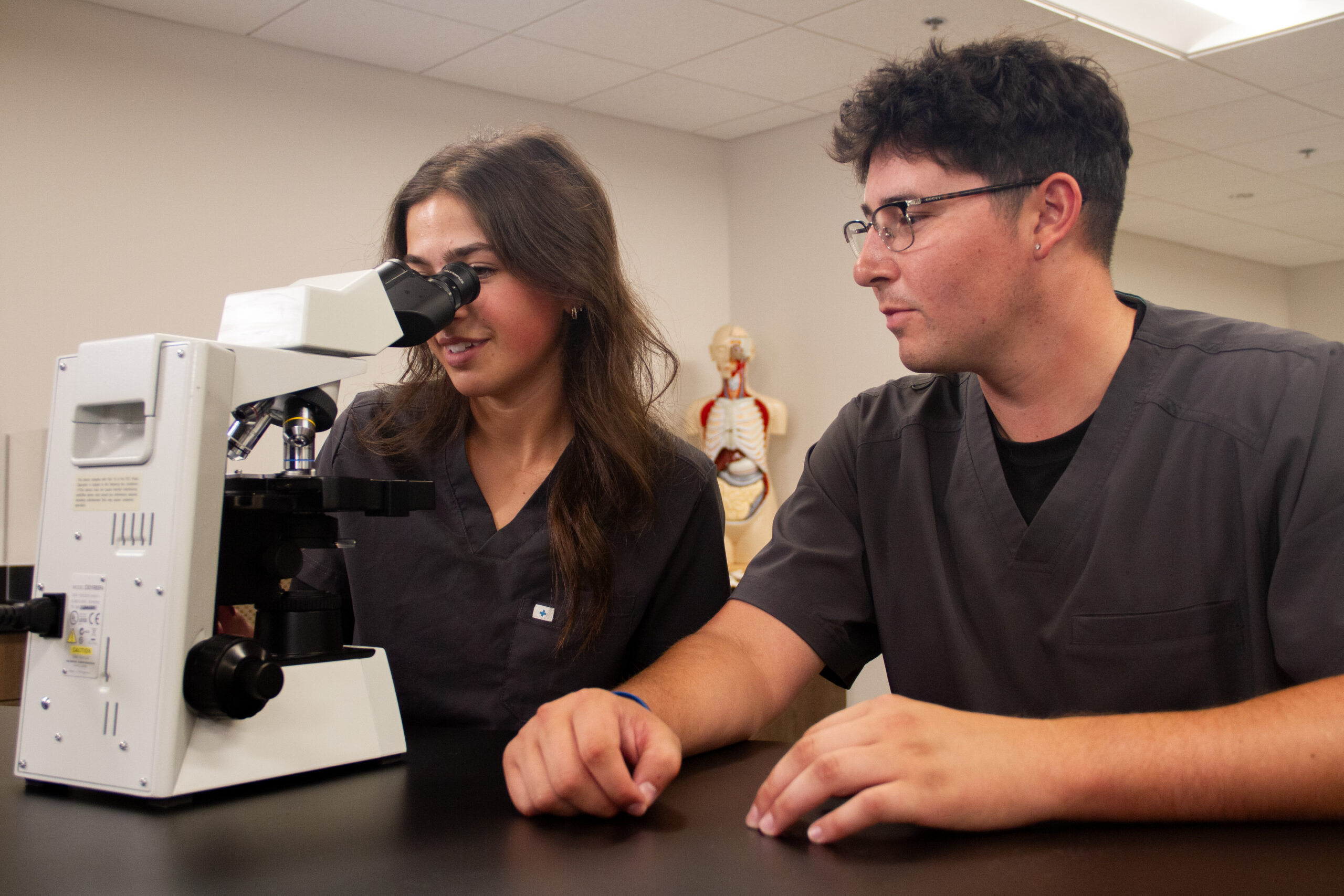
Medical Laboratory Technician students at Bismarck (ND) State College (BSC) are gaining valuable hands-on work experience this summer and fall. As part of their program, the students complete clinical rotations at a hospital or similar medical setting, working alongside healthcare professionals in a variety of labs and putting their studies to the test. They’ll each complete about five months of full-time lab work before returning to school and graduating in December.
This year, the well-organized program is running even more efficiently thanks to Compass by Golden Path Solutions.
As one of the first colleges to use Compass to connect with high school students, BSC is now also the first college to use the platform to support internships for its own students. Working closely with Golden Path last spring, the college expressed an interest in using Compass specifically for clinical time tracking and providing a shared program for all parties – students, faculty, and healthcare preceptors (supervisors) and coordinators. By modifying a few features and streamlining the employer sign-up process, Compass became a central hub to manage each student’s unique clinical experience. (This system is now rolling out to all public universities across the state.)
“Golden Path and Compass have done a good job of tying all of us together. It’s making the whole experience optimal for students and employers.”
– Cristie Dockter, BSC Experiential Learning Coordinator
Putting classroom learning to work
Medical lab technicians (MLT) work in healthcare settings under the supervision of a health professional. They perform general lab tests, such as blood panels and urine analyses, that help medical providers diagnose and treat diseases and illnesses.
Students can prepare for this career by earning a degree in MLT, like BSC’s two-year Medical Lab Technician Associate of Applied Science. It’s one of nearly 30 Health Science career pathways at the college.
Like many of the other Health Sciences, MLT requires clinical rotations as part of the degree. Built into the program, these hands-on work experiences allow students to apply what they have learned in the classroom. They receive supervision and mentorship by medical professionals, learn hospital procedures and work culture, and build a relationship with the healthcare company.
Healthcare laboratory professionals serve as preceptors and mentors throughout the clinical rotations, helping students develop technical skills and gain exposure to real-world laboratory operations.
“By having the students come to the lab for their last school year, they learn to incorporate the background knowledge of their studies into real-world situations,” says Breanna Henke, Clinical Education Coordinator for the Laboratory at Sanford Health in Bismarck.
“More importantly, I believe they develop troubleshooting and critical thinking skills that they don’t have the same opportunity to practice in a classroom setting,” Henke adds. “They rotate through every department, shadow experienced laboratory professionals, and perform many of the same hands-on tasks they will be responsible for after graduation. Clinical experiences like these also help build the future laboratory workforce by connecting students with potential career opportunities in healthcare.”
From clinical experience to career
The clinicals are a valuable experience that prepares students for their futures.
“I enjoy clinicals because it connects the knowledge I have learned from the classroom into real-life scenarios and ties it all together,” says Deondre, a BSC student from Bismarck who is completing his clinicals at Sanford Health in Bismarck. “My phlebotomy and chemistry skills have gotten better from the great preceptors and trainers I have been learning from.”
In addition to playing a key role in the MLT degree, the clinicals also seek to match students with a healthcare company they can work for following graduation.
“We have a nationwide critical shortage of lab techs,” says BSC Medical Lab Technician Program Director Cathleen Smesrud. “The goal is that by the time students are finished with clinicals and their degree, they are already hired as a lab tech.”
Bringing it all together in Compass
Clinical requirements vary for each Health Science program and often within each program. They are based more on proficiencies, objectives, and evaluations, rather than hours or weeks logged in particular departments. This leaves a fair amount of flexibility to each healthcare facility.
This is where Compass comes in.
BSC accepts 18 students into the MLT program each year and offers clinicals at an average of four healthcare sites. Each site has its own clinical coordinator, several preceptors (as many as seven per site), and its own program requirements and procedures. Students typically work 40 hours per week for 720 hours total. They rotate every two to four weeks through a variety of departments, including phlebotomy, urine, micro, chemistry, and hematology.
It’s a lot of locations, labs, people, hours, and requirements.
Compass provides a central location to manage all of these details. After visiting with hospitals and clinics to find placements for all of the MLT students, BSC faculty leveraged existing employer accounts or created new ones on behalf of their partners. Then, they helped set up the internships/clinicals in the program and invited the healthcare facilities to take over the accounts.
“It was easy setting things up on the employer side,” Smesrud says. “The less we need to have the healthcare employers do, the better. They are already taking on a student and helping us.”
Students received brief Compass training, downloaded the mobile app to their phones, and accepted their offered positions. From there, students use Compass to log their hours and which preceptor they worked with each day. Faculty monitor student participation, preceptors confirm hours and sign documents as needed, and site coordinators keep track of overall progress.
“Compass has been easy to use and has helped me stay organized by keeping my clinical information and hour tracking in one location. I can see this being a useful tool as I begin looking for employment in the near future, as well.”
– Avarie, BSC student from Wilton, ND, completing her clinicals at Sanford Health in Bismarck
Building on a successful start
This is just the beginning of the internship work in Compass. Dockter and Smesrud are already visiting with Golden Path to add a document-sharing feature for student objectives and competencies. It would eliminate the need for paper copies, streamline the process, and keep everyone on the same page.
“The preceptors can’t access Blackboard to see everything the students are evaluated on,” Smesrud says. “Students provide that to them now by printing it out. Soon students will be able to share that in Compass, where all people who should have access to a copy can obtain it quickly and easily.”
Other programs across the BSC campus have also expressed interest in using Compass for internship management.
“We’re really focusing in the next few months on getting students engaged with Golden Path,” says Dockter. “It starts with getting students into the application and their profile and letting them look at internships. We will develop this across campus, but we are focusing first on Health Sciences because they are process-driven. Then we’ll pull in other programs.”
Finally, BSC is leading the way for all of the North Dakota University System (NDUS) institutions to leverage Compass to support their students in career exploration and planning. Thanks to a grant from the Midwestern Higher Education Compact (MHEC), all 11 NDUS institutions now have access to Compass and have been working with Golden Path all summer to create their accounts.
“Compass is flexible, useful, digital, allows for transparency, and allows for networking between all of the different audiences,” Dockter says. “I find that really valuable.”
Contact Golden Path Solutions for more information about Compass.